The decline is the product.
A general assistant answers everything, so it can never tell you what your material fails to cover. Ours can, and it tells the instructor too.
Four distinct verdicts, kept apart on purpose: answered, nearly covered, not covered, and answered from general knowledge.
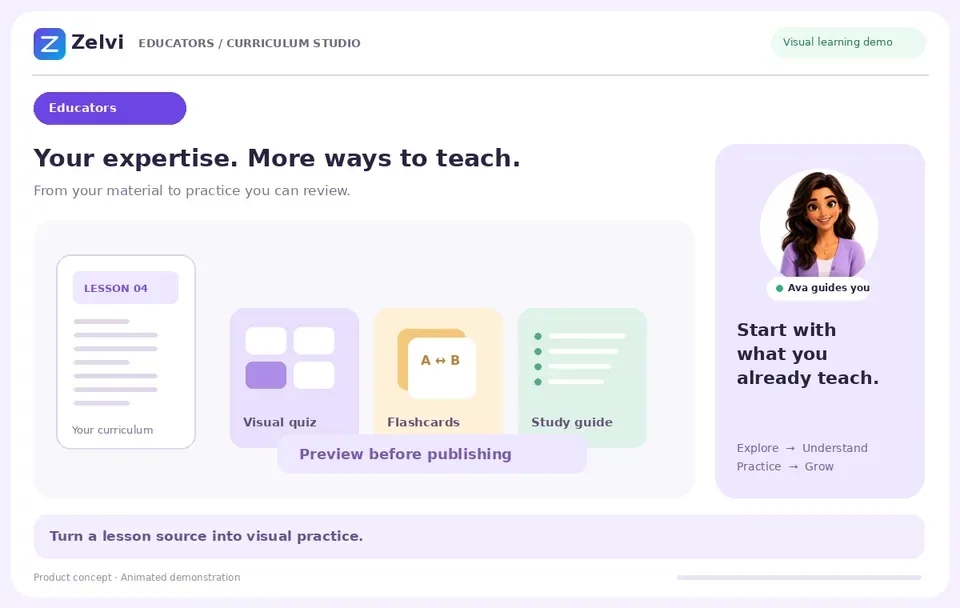
Draft and published are separate states; preview exactly what an enrolled student sees before releasing anything.
Where the material falls short is recorded, so a curriculum gap becomes a report rather than a rumour.
Instructors change reading level, translate and draft feedback from the same material, with the pages cited.
What this rests on
- Answers cited back to your own material, with the instructor one tap away when the material does not cover itOn our go/no-go benchmark every answer retrieved the right passage, carried a valid citation and stayed inside the material, and every out-of-scope question routed the learner to the instructor rather than a guess — against 54.2% for handing the model the whole document.
- Every procedure step and rubric criterion carries a reference back to the document it came fromA criterion with no source reference is refused before it can be saved. Not a warning — a rejection.
- Instructors attach their own documents to a course, review them as a draft, and publish when readyFourteen checks driven through a real browser, including that a student cannot see a draft and that publishing opens the document itself.
- Preview exactly what an enrolled student sees before you release anythingThe preview is built from the same rule the database itself enforces, so it cannot drift from what a student actually sees.
- Change reading level, translate, and draft feedback on student work, all from the course’s own materialFeedback cites the course pages it relies on, translation keeps the English term beside each subject term, and every pasted text is fenced from the instructions.